Hairline Cracks in Concrete: Are They Serious?

February 5, 2026

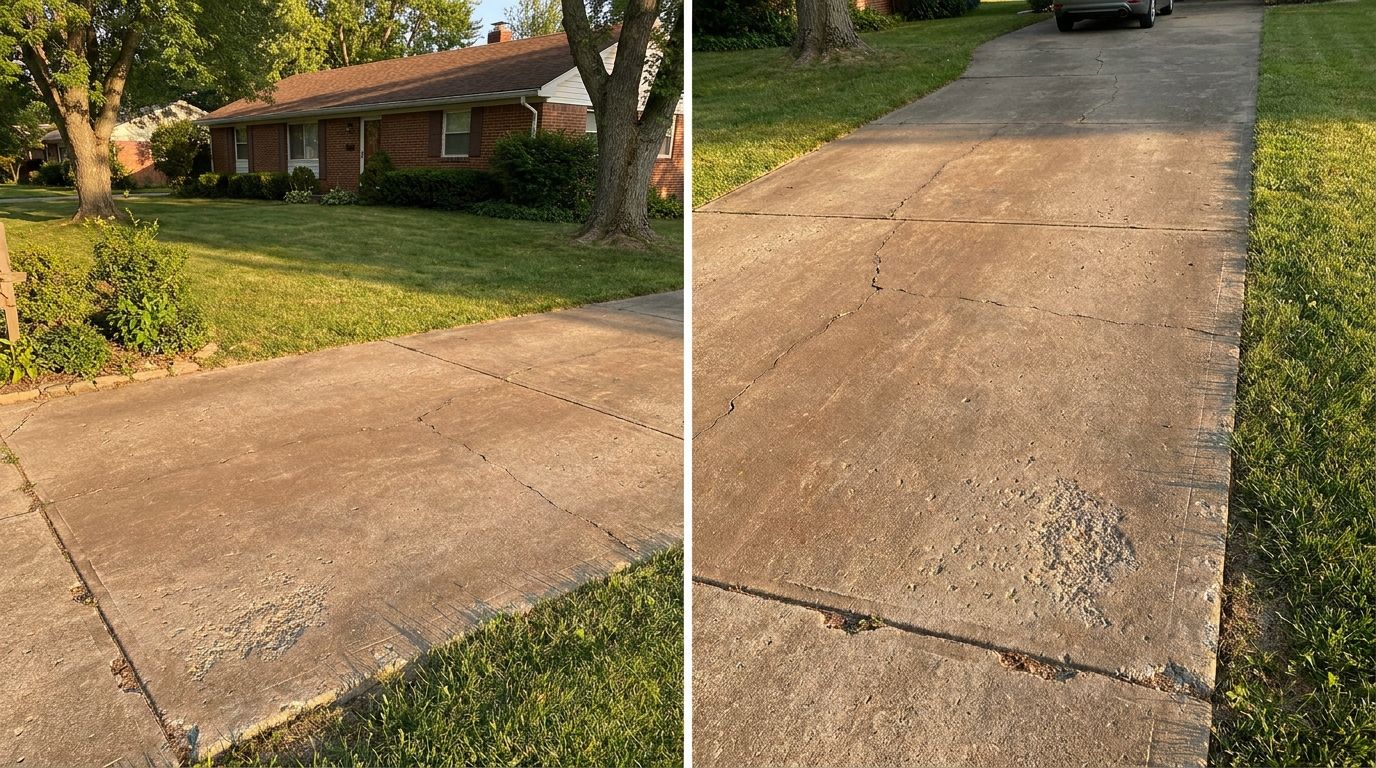
You’re walking out to your car one morning, and you notice it, a thin line running across your driveway that wasn’t there last year. It’s barely wide enough to catch a fingernail, but once you see it, you can’t unsee it.


Are concrete hairline cracks something to worry about? Or can you safely ignore them?


Most hairline cracks are cosmetic and completely normal. But “most” isn’t “all,” and that’s where it gets tricky. Here’s what Indianapolis homeowners should know about why concrete cracks and when it’s time to take action.


What Are Hairline Cracks?

Hairline cracks are thin surface fractures in concrete, usually less than 1/16 of an inch wide. They can show up as single lines, branching patterns, or a web-like network on driveways, sidewalks, patios, and garage floors.


Here’s the thing: concrete is almost guaranteed to crack at some point. It’s not a question of if – it’s a question of when and how much. Understanding why they form is the first step in knowing whether yours are a problem.


What Causes Concrete Hairline Cracks?

Several factors contribute to hairline cracking, and most of them are out of your control.


Shrinkage during curing. As fresh concrete cures, water evaporates, and the material shrinks. If the surface shrinks faster than the base, tiny cracks form. This is the most common cause and can happen even on the best-poured slabs.


Temperature changes. Concrete expands in heat and contracts in cold. In Indianapolis, where summers push past 90 degrees and winters dip below freezing, that constant cycle creates stress that eventually shows up as cracking.


Settling and soil movement. The ground beneath your concrete shifts and absorbs water unevenly. If the base wasn’t properly compacted before pouring, the slab settles, and cracks develop.


Excess water in the mix. Concrete mixed with too much water is weaker once cured. The extra moisture creates voids as it evaporates, making the surface crack-prone.


Heavy loads and impact. Repeated heavy loads – construction equipment, overloaded trucks, or large dumpsters – can stress residential concrete beyond its limits.


When Are Hairline Cracks Harmless?

If a crack is narrow (less than 1/8 inch), shallow, and isn’t growing or shifting, it’s most likely cosmetic. Shrinkage cracks that appeared within the first year of pouring are especially common and nothing to lose sleep over.


Signs your hairline cracks are probably fine:


  • They haven’t changed in size or length over several months
  • Both sides of the crack are level (no raised or sunken edges)
  • No water pooling around or seeping through the cracks
  • The surrounding concrete still feels solid underfoot


That said, even harmless cracks deserve attention. Water seeps into the thinnest openings, and freeze-thaw cycles in Indiana winters will expand that crack bit by bit. What starts as a hairline fracture today can become a real problem in a couple of seasons.


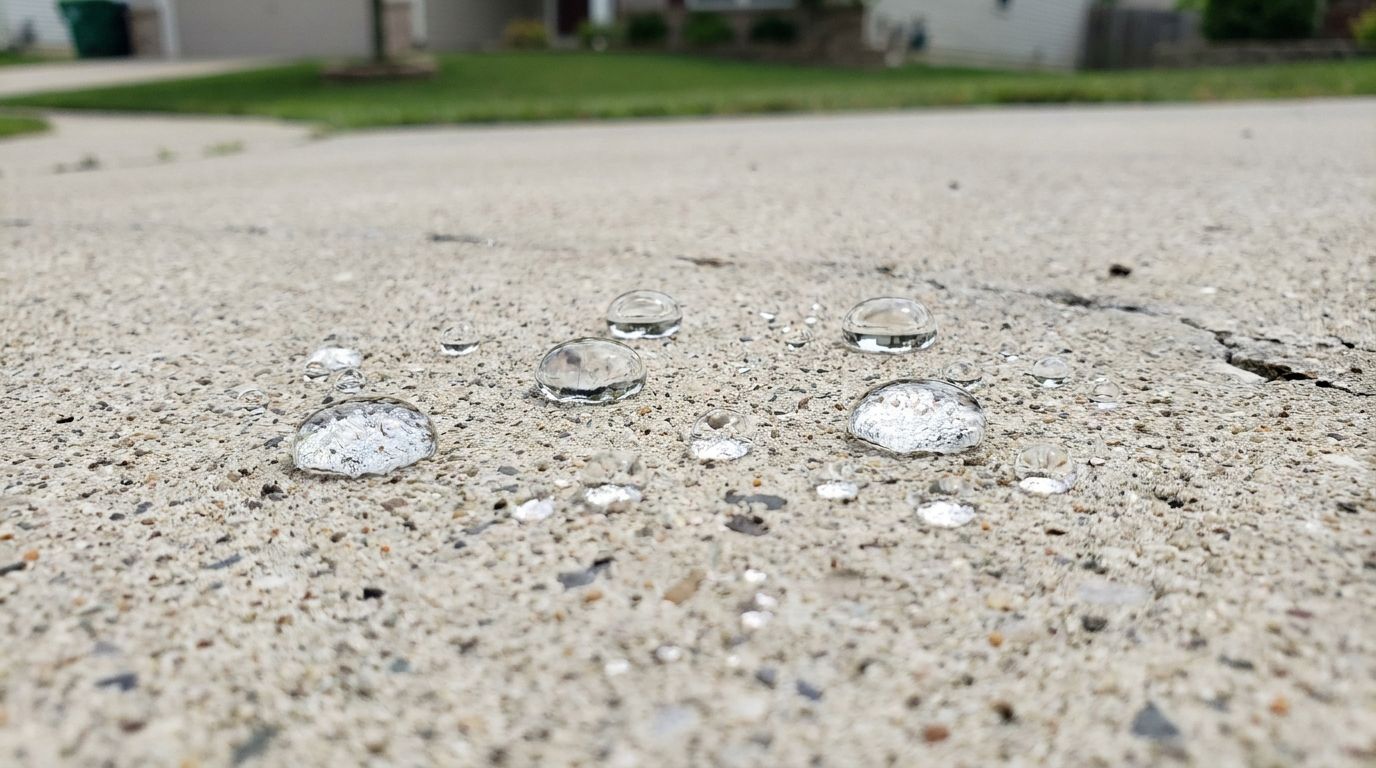
This is why concrete sealing matters. A quality sealer creates a protective barrier that keeps moisture out – including moisture that would work its way into small cracks and make them worse.


When Should You Be Concerned?

Not all cracks are innocent. Pay closer attention if you notice:


  • The crack is wider than 1/4 inch or is growing wider over time
  • One side is higher than the other – the slab is shifting, or the base is failing
  • Multiple cracks forming in a pattern – starburst or spider web shapes indicate structural stress
  • Water coming up through the crack – possible drainage issues beneath the slab
  • Sudden cracking after heavy rain or freeze-thaw – the soil base may be undermined


Catching issues early is always cheaper than dealing with them after the slab fails. For cracks that need filling, our guide on how to repair a concrete driveway walks through the process.


What Can You Do About Hairline Cracks?

For cosmetic hairline cracks, the best course of action is preventive maintenance:


Seal your concrete. Professional concrete sealing is the most effective way to prevent small cracks from becoming big ones. It shields against water, salt, oil, and UV damage – all of which accelerate crack growth in Indiana’s climate.


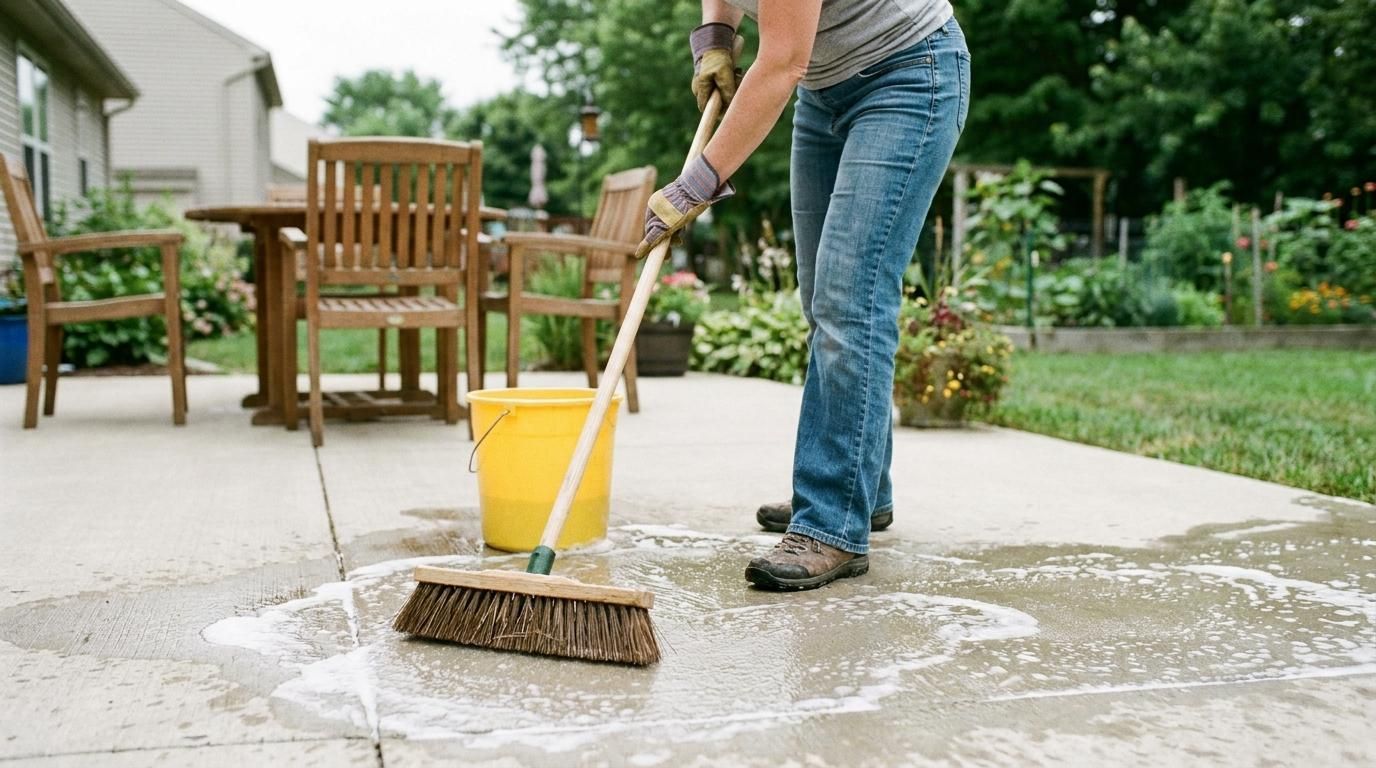
Keep it clean. Dirt and debris trap moisture against the surface. Regular pressure cleaning removes buildup and helps you spot new cracks early.


Time your maintenance right. If you’re cleaning and sealing, give the concrete enough time to dry between steps. We cover the specifics in our post on how long to wait after pressure washing before sealing.


Address drainage issues. If water pools near your concrete, it adds stress to the surface. Redirecting downspouts or grading soil can reduce the moisture load.


The Bottomline 

Hairline cracks in concrete are incredibly common, and in most cases, nothing to panic about. They’re a natural part of how concrete behaves, especially in Indianapolis, where temperature swings are significant.


But “harmless now” doesn’t mean “harmless forever.” Without sealing and maintenance, even the smallest crack lets in water, salt, and debris, which slowly break down concrete from the inside out.


The smartest move? Stay ahead of it. Keep your concrete clean and sealed, and watch for any cracks that change over time.


Wondering whether your concrete needs attention? Reach out to 317 Seal for a free estimate. We’ll evaluate your surfaces and recommend the best plan to keep them strong for years to come.

February 2, 2026
Soft washing vs pressure washing for concrete. Learn which method works best for your Indianapolis driveway or patio and why the wrong choice causes damage.
January 8, 2026
How long should you wait before sealing concrete after pressure washing? We explain the ideal drying time for a long-lasting, protective finish in Indianapolis.
January 5, 2026
317 Seal shares how sealing your concrete driveway in Indianapolis protects it from damage, extends its life, reduces maintenance, and enhances curb appeal.
December 4, 2025
Discover what surface cleaning is, and how it boosts concrete longevity. 317 Seal Inc. explains the process for removing contaminants and protecting surfaces.
December 1, 2025
What is good for cleaning concrete? From degreasers to oxygen bleach, learn which products and methods remove different stains, and when to call 317 Seal Inc.
November 4, 2025
Learn how do you repair a concrete driveway with our complete step-by-step guide. Fix cracks, spalling, and surface damage effectively to extend your driveway's lifespan.
November 3, 2025
Discover the benefits and best practices for driveway concrete pressure cleaning. Keep your concrete safe, clean, and ready for sealing with expert tips.
Backyard with a dark blue, octagonal swimming pool surrounded by concrete and landscaping.
October 1, 2025
Without proper protection, concrete can deteriorate rapidly, leading to costly repairs or complete replacement. That's where professional concrete sealing comes in.