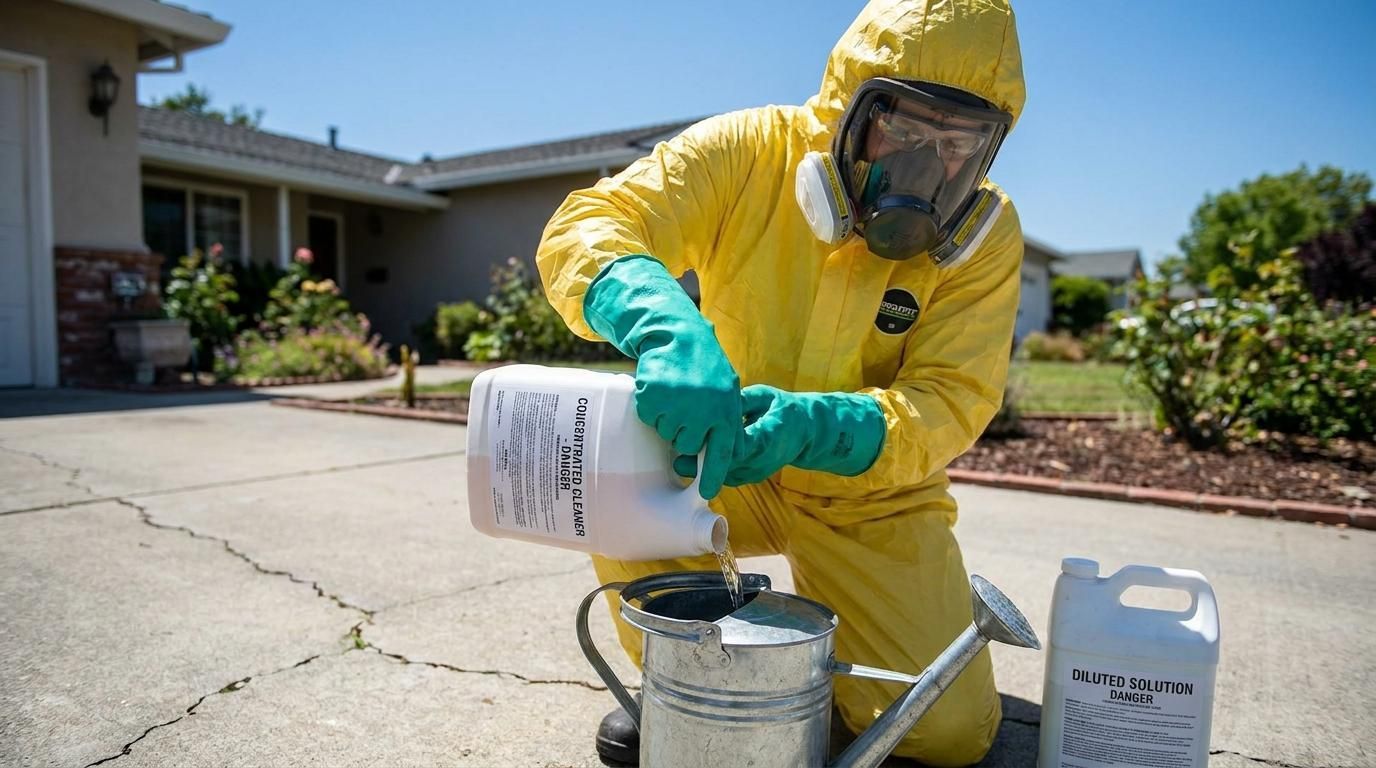
Gather these before you start:
- Absorbent material (cat litter, cornstarch, or commercial oil-dry) for fresh spills
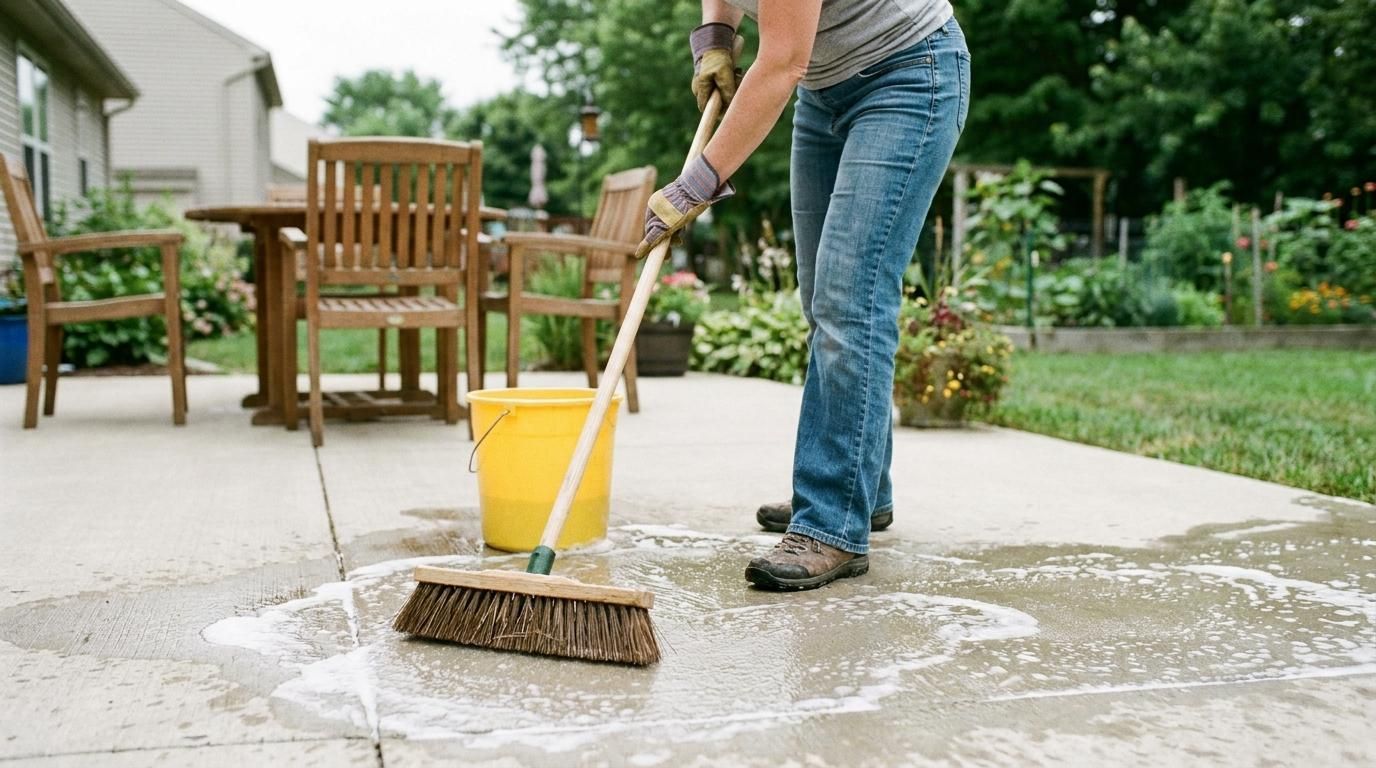
- Stiff-bristle scrub brush (not wire, which scratches the surface)
- Commercial concrete degreaser (available at hardware stores)
- Pressure washer or strong garden hose nozzle
Avoid bleach. It doesn’t break down oil and can discolor concrete. Dish soap handles fresh spills only.
How To Remove an Oil Stain From a Concrete Driveway
Oil stains don't wait around, and neither should you. The faster you act, the less the oil penetrates the concrete's pores and the easier it is to remove completely.
Step 1: Absorb What You Can
Cover a fresh spill immediately with cat litter or cornstarch, let it sit 30 minutes, then sweep it up. This pulls oil off the surface before it migrates deeper into the slab.
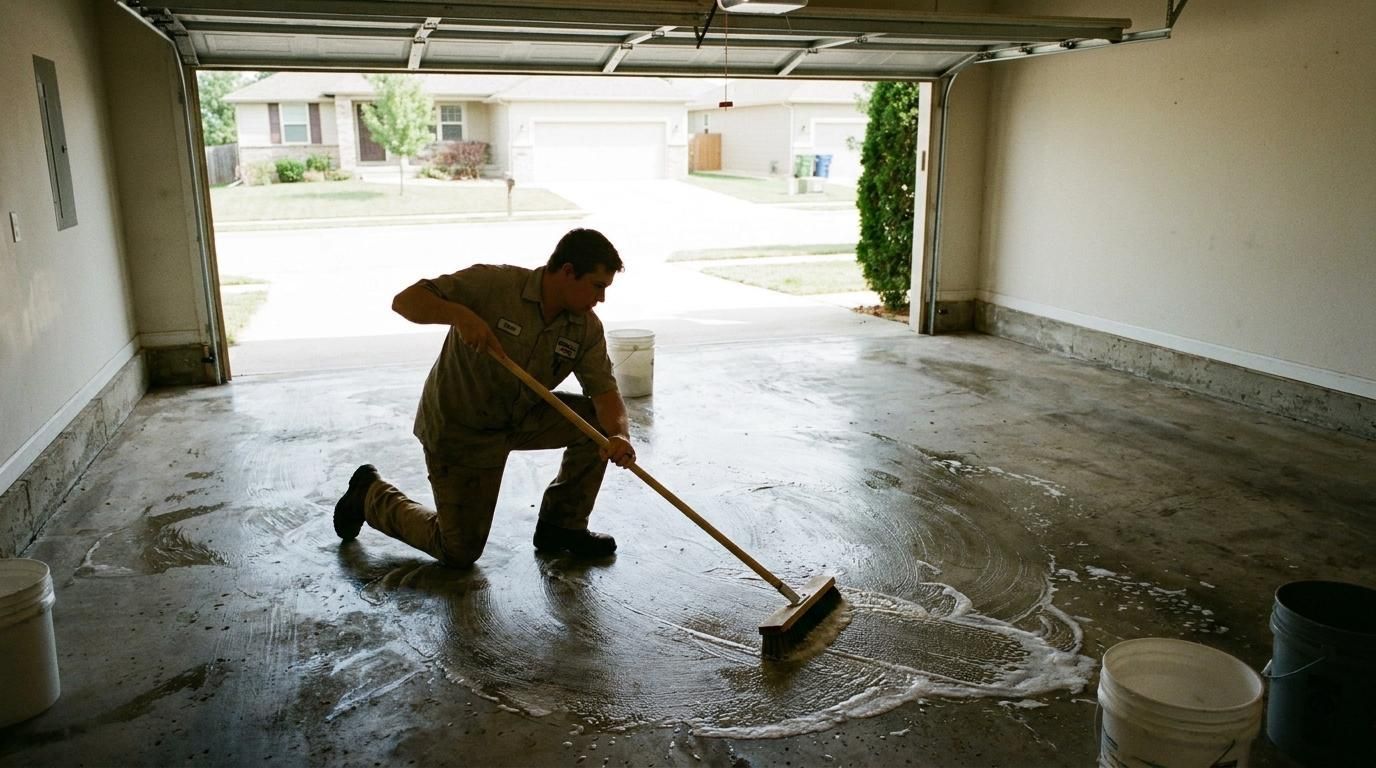
Step 2: Apply Degreaser and Scrub
Saturate the stain with a commercial concrete degreaser and let it dwell for 10 to 15 minutes. Work it in with a stiff-bristle brush using firm circular motions—you're breaking the bond between oil and pores, not just spreading cleaner around. For stains older than a week, repeat this two or three times.
Step 3: Rinse and Reassess
Flush the whole area with a pressure washer or strong nozzle. Rinsing only the stain leaves an outline at the edges. Let the concrete dry completely before judging results; wet concrete masks how much you've lifted. If the oil stain is still visible, run another degreaser round.
When DIY Isn't Enough
If store-bought degreasers aren't making a dent, the stain has likely worked its way deeper into the concrete than surface cleaning can reach. At that point, you need stronger tools than what's on the hardware store shelf.
Homeowners across Indianapolis and Avon can get a straight assessment from 317 Seal. Our services include
concrete stain removal as part of the full process.
Frequently Asked Questions
Does dish soap actually remove oil stains from concrete?
Dish soap works on oil stains less than 24 hours old that haven't soaked deeply into the pores. It breaks down surface-level grease but can't reach oil that's penetrated the slab. For anything older than a day, a concrete degreaser is more effective and still affordable.
Can a pressure washer remove oil from a driveway without degreaser?
A
pressure washer alone won't lift an oil stain. Water and pressure can't break down petroleum-based compounds without a chemical agent. Apply degreaser first, let it sit, scrub, then rinse with the pressure washer. That sequence draws oil out of the pores rather than spreading it across the surface.
Should I seal my driveway after getting rid of an oil stain?
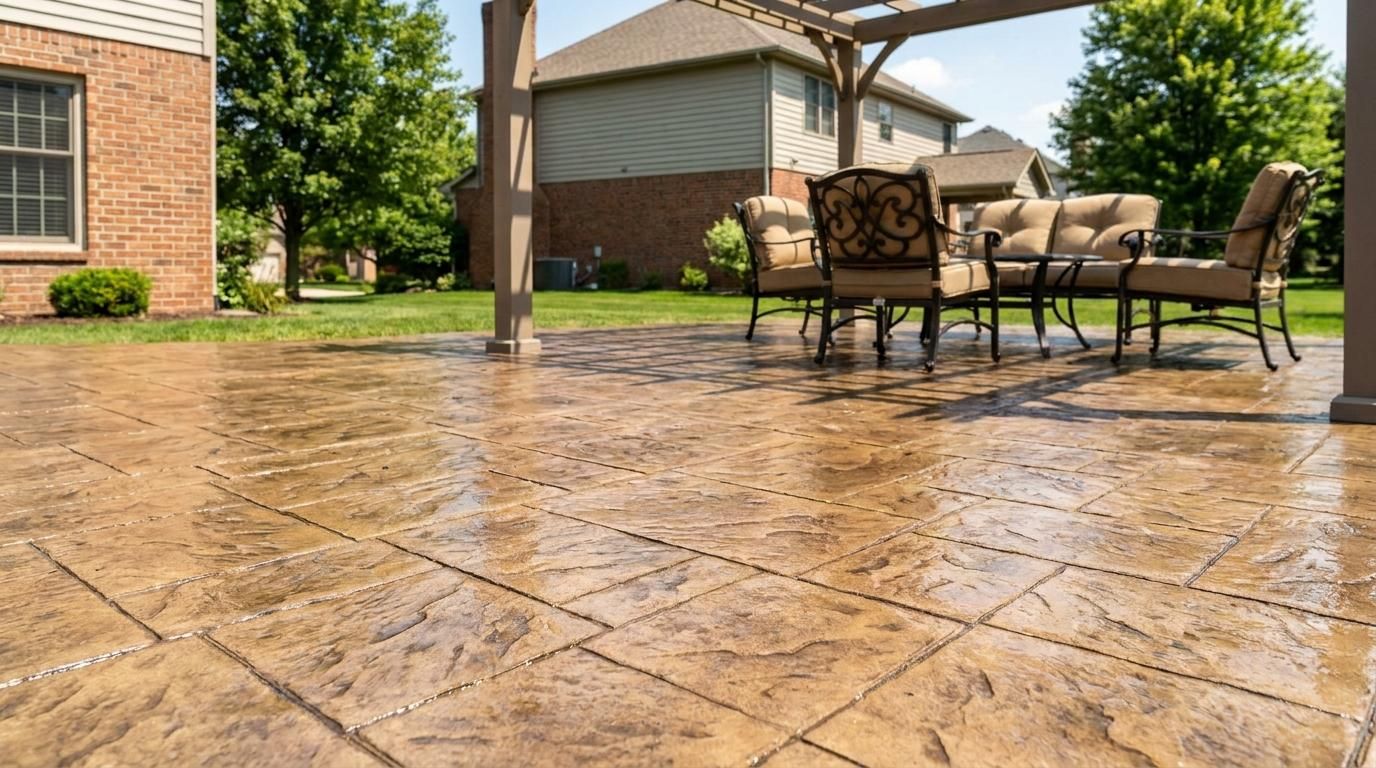
Sealing is worth doing once the stain is out and the concrete is dry. A commercial-grade sealer closes the pores that let oil penetrate in the first place, making future spills easier to clean. The team at 317 Seal recommends
resealing Indianapolis driveways every two to three years to guard against oil, road salt, and freeze-thaw cycles.
Get a Clean Driveway Without the Guesswork
DIY stain removal works when a spill is caught early and the steps are followed. Older stains and Indiana winters can push a stain past what a Saturday afternoon and a bottle of degreaser can fix. When that's the case, professional treatment is the more cost-effective path.
317 Seal Inc. handles concrete stain removal, washing, and sealing for homeowners and businesses across Indianapolis and Central Indiana.
Contact us today for a free quote and a straight answer about what your driveway needs.