How to Tell If Your Concrete Is Already Sealed (4 Simple Tests)
How to tell if concrete is sealed takes less than five minutes with a few simple checks. The water drop test, a visual sheen inspection, a light surface scratch, and a review of your slab's maintenance history is enough to tell you whether the existing sealer is still protecting the surface. 317 Seal Inc. runs these same checks at the start of every Indianapolis project.
After nearly a decade of sealing concrete across Central Indiana, the 317 Seal team has learned that about half the driveways we inspect still have some sealer on them. The problem is that partial coverage protects nothing, and applying new sealer over a failing old coat creates adhesion issues that shorten the new product's life.
Test 1: The Water Drop Test
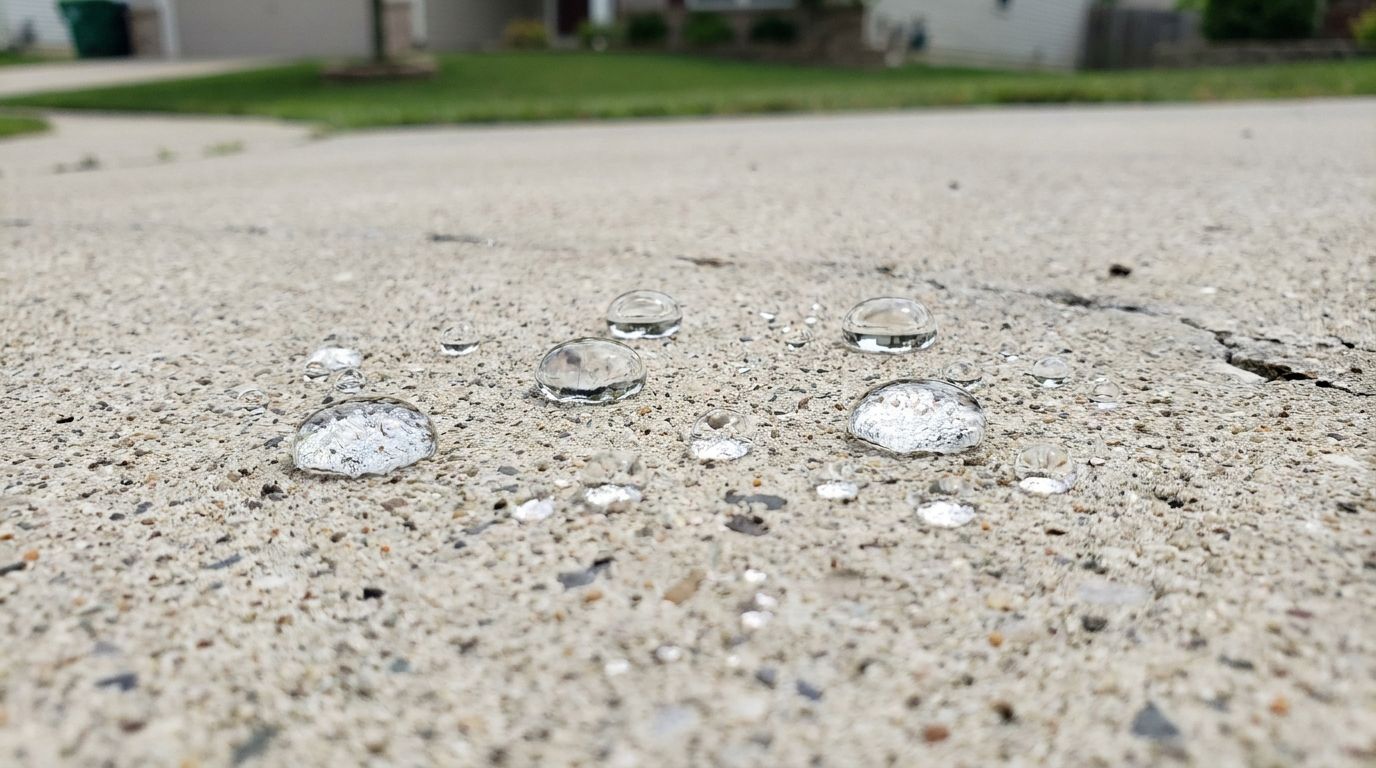
This is the fastest and most reliable check. Sprinkle a small amount of water on the concrete surface and watch what happens. If the water beads up and sits on top, the sealer is intact. If it soaks into the concrete and darkens the surface within 30 seconds, the sealer has worn through or was never applied. Test multiple spots across the driveway, since sealers wear unevenly. High-traffic areas and edges exposed to road salt often lose protection first. Understanding what sealing does to concrete explains why this simple test works.
Test 2: The Visual Sheen Check
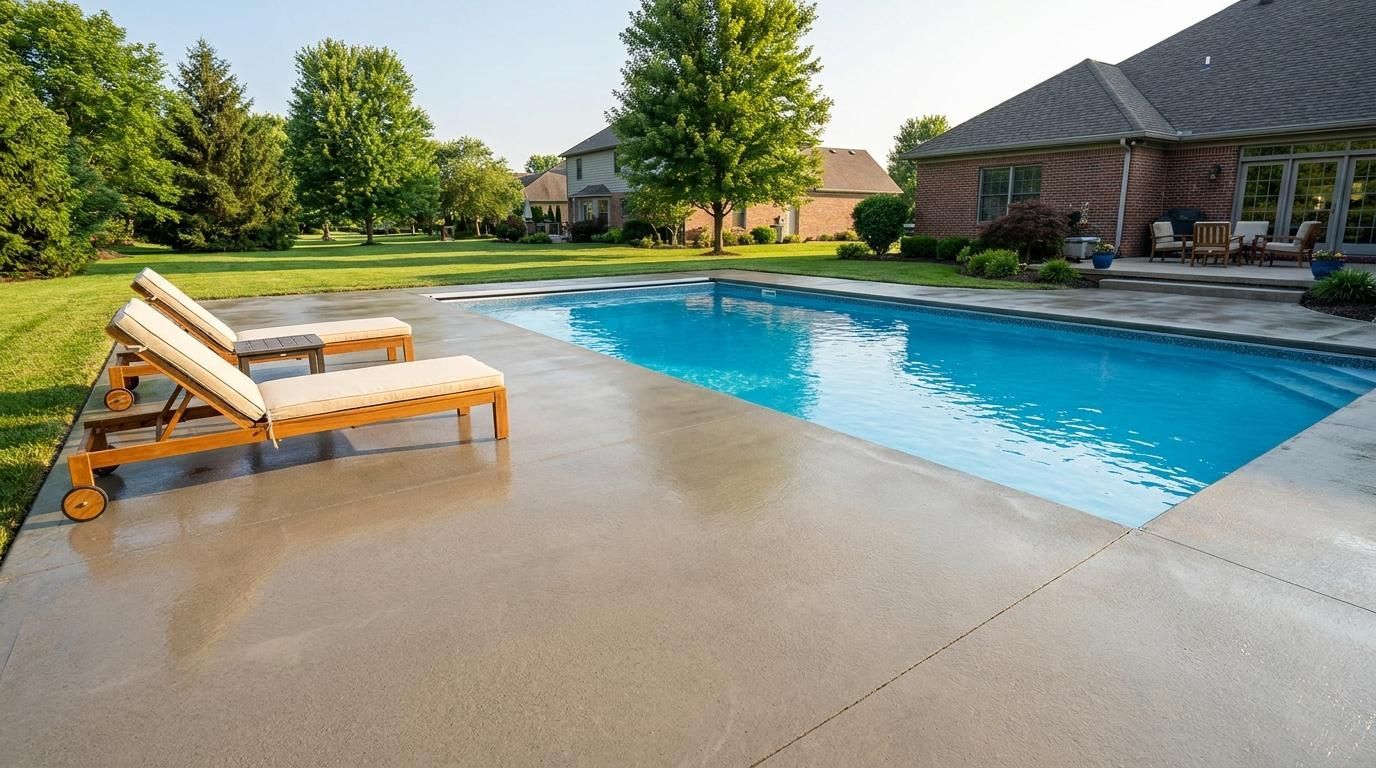
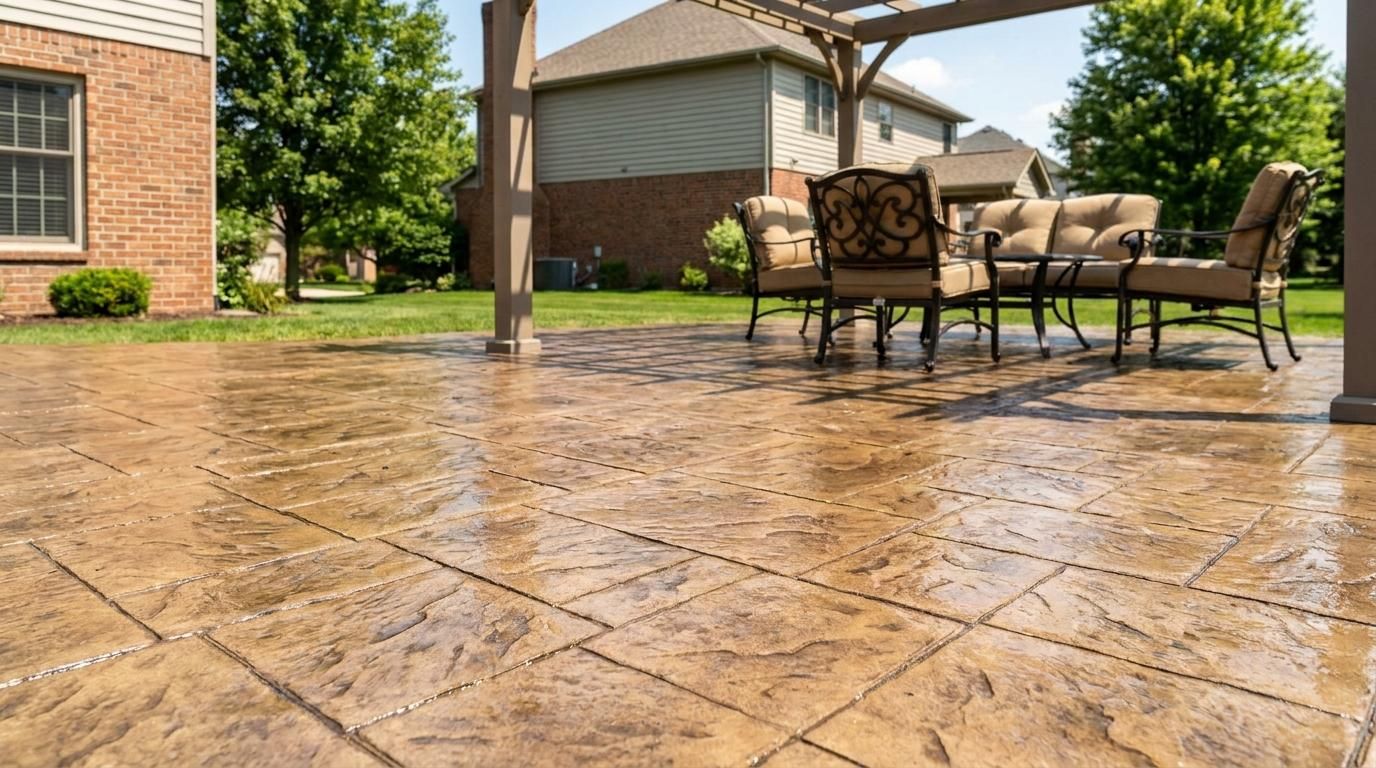
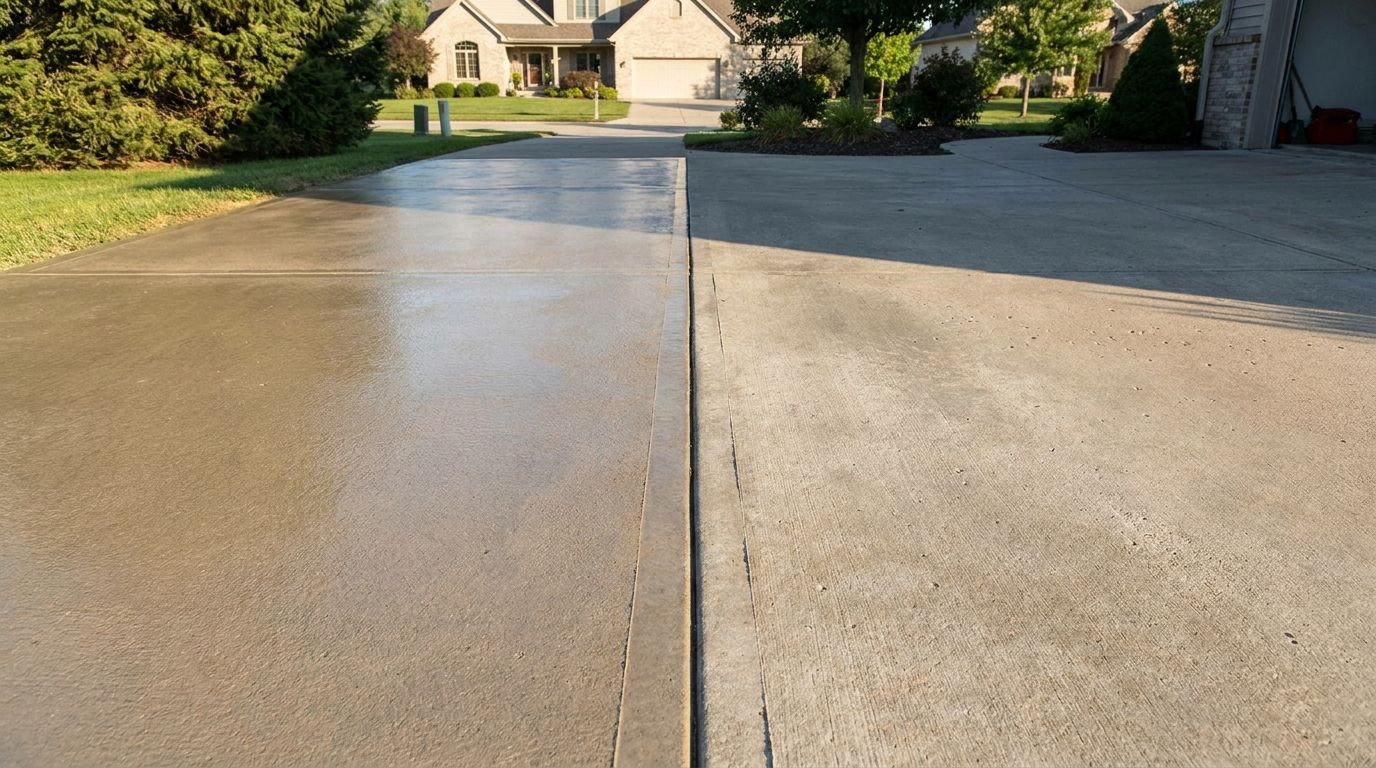
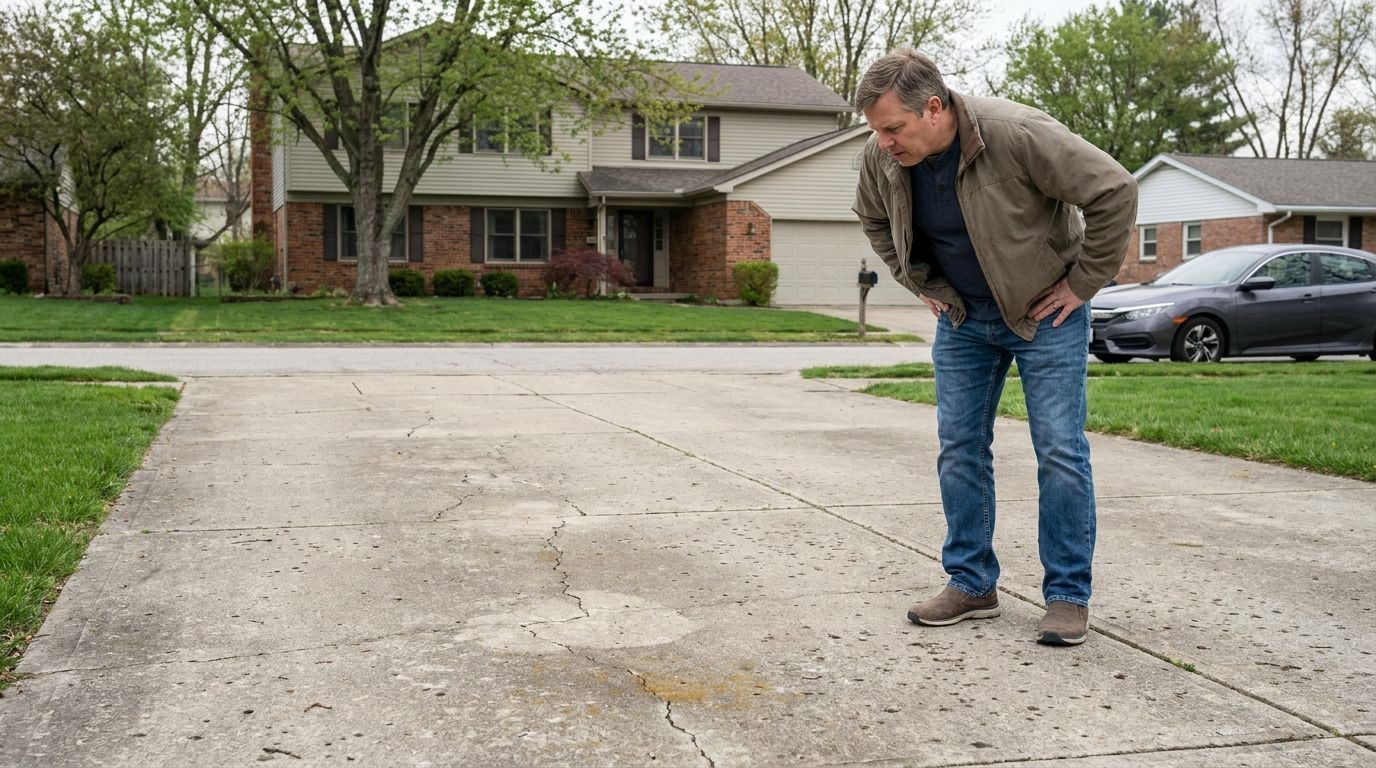
Sealed concrete has a subtle sheen or luster, especially visible in direct sunlight. Film-forming sealers (acrylics and polyurethanes) leave a noticeable glossy or satin finish. Penetrating sealers are harder to spot visually since they absorb below the surface, but even they leave the concrete looking slightly richer in color than bare, unsealed concrete. If the surface looks uniformly dull, chalky, or faded, the sealer has likely broken down. Compare a sheltered area (under a porch overhang or against the garage wall) to an exposed section for a clear before-and-after reference.
Test 3: The Light Surface Scratch
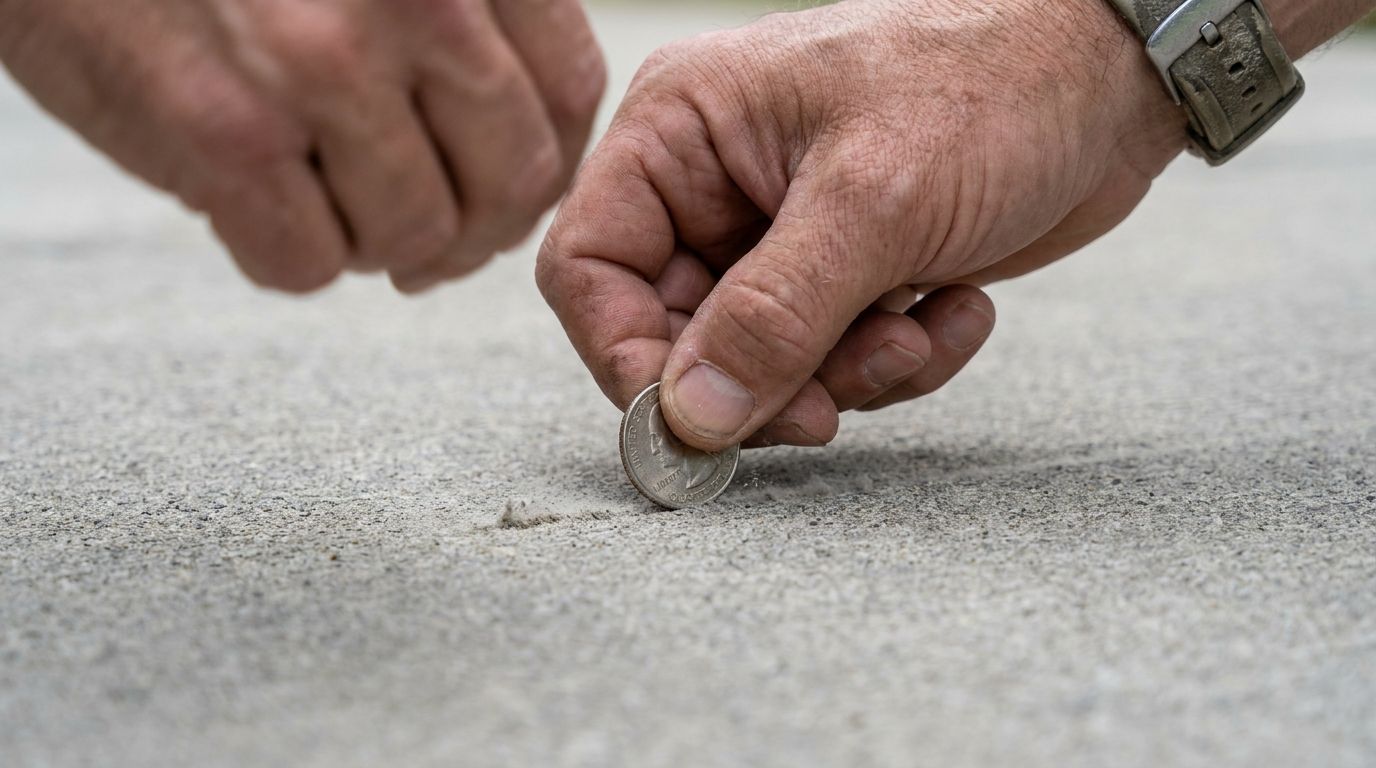
Run the edge of a coin or key lightly across the concrete in an inconspicuous spot. On sealed concrete with a film-forming sealer, you'll see a faint white scratch mark in the coating. On unsealed concrete, the coin contacts the bare surface directly and no coating mark appears. This test works well for film-forming sealers like acrylics but won't detect penetrating sealers, since those sit below the surface rather than on top of it.
Test 4: The Maintenance History Check
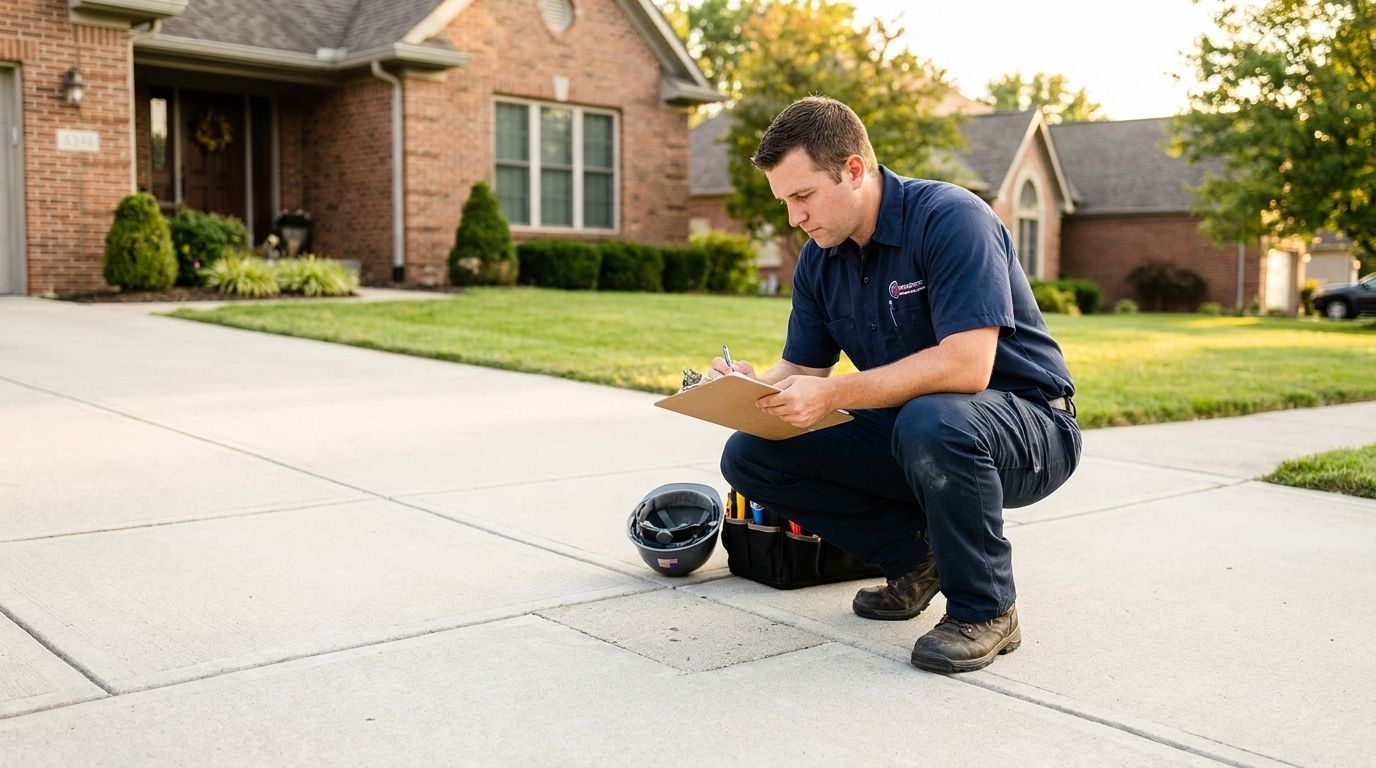
If you know when the concrete was last sealed, the timeline tells you a lot. In Indianapolis, most sealers last two to three years before they need renewal. If it's been longer than three years since the last application, the sealer has almost certainly worn through in high-traffic and weather-exposed areas. For driveways where the sealing history is unknown, combine the water drop test with the visual check for the most reliable answer. 317 Seal's inspection process includes all four checks before recommending any product.
Frequently Asked Questions
What does sealed concrete look like compared to unsealed?
Sealed concrete typically has a subtle sheen or slightly richer color than bare concrete. Unsealed surfaces look chalky, dull, and porous. The difference is most visible right after a rain, when sealed concrete dries quickly and evenly while unsealed concrete stays damp and blotchy longer.
Can you apply new sealer over old sealer?
You can if the existing sealer is the same type and still in decent condition. Applying over a failing or incompatible sealer causes peeling, bubbling, and adhesion failure. When in doubt, strip the old sealer first. 317 Seal Inc. tests compatibility before layering any new product over an existing coating.
How long does concrete sealer last in Indianapolis?
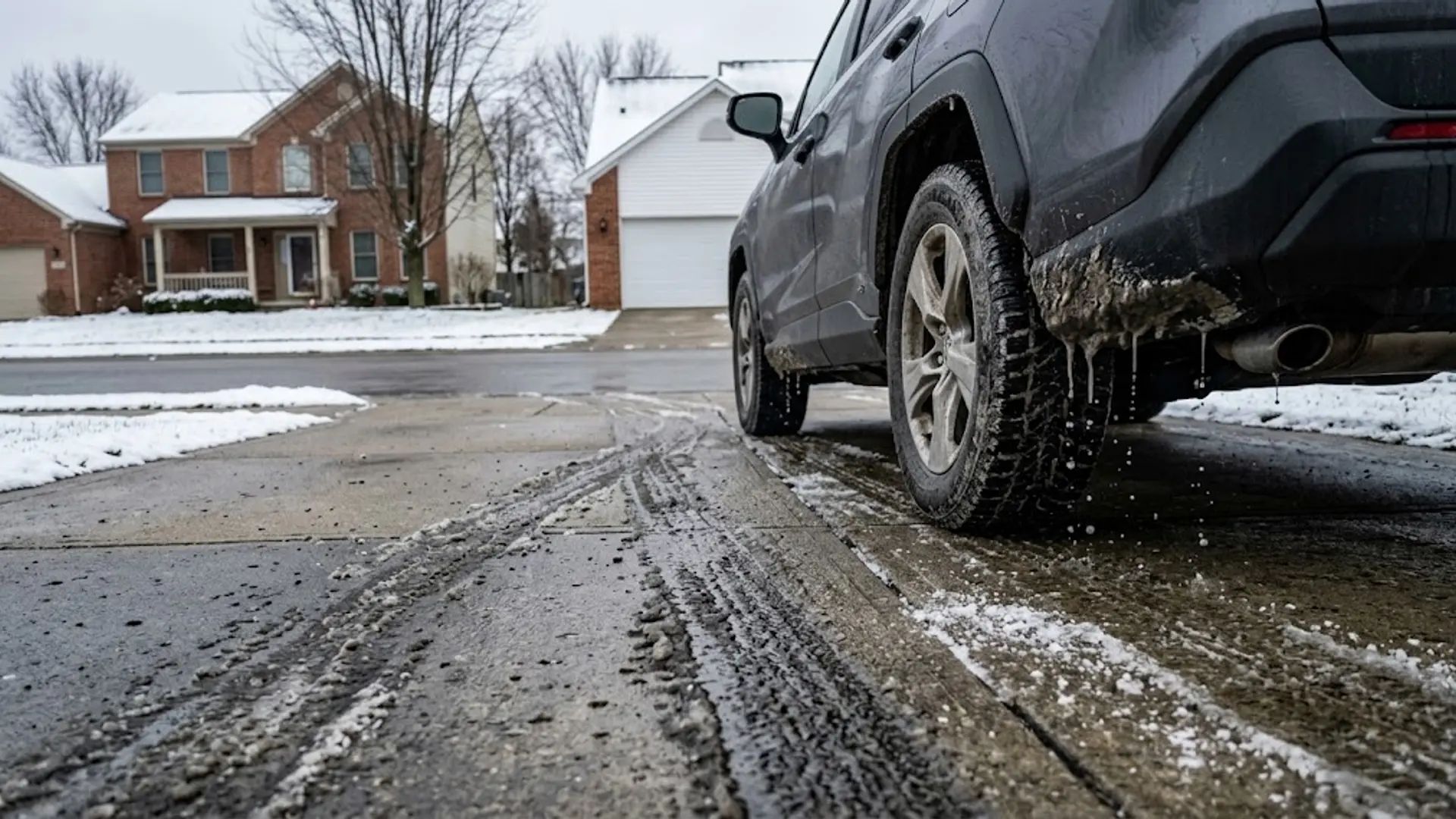
Most sealers last two to three years in Indianapolis due to the combination of freeze-thaw cycles, road salt exposure, and UV from summer sun. Penetrating sealers tend to last slightly longer than film-forming types because they sit below the surface where mechanical wear can't reach them.
Know Where Your Concrete Stands
Running these four tests takes a few minutes and tells you whether your driveway needs fresh sealer or still has protection in place. Knowing the answer before you hire a contractor prevents unnecessary applications and ensures the next seal bonds properly to the surface.
Call (833) 317-7325 or send us a message for a professional inspection and free estimate on your Indianapolis driveway.