
How to Remove Tire Marks From Your Concrete Driveway in Indianapolis

Kris Fricks • June 25, 2026

To remove tire marks from concrete, apply a degreaser or citrus cleaner, let it dwell, scrub with a stiff-bristle brush, and rinse. For stubborn marks that don't fully lift, pressure washing draws out what hand-scrubbing leaves behind. The reason a plain rinse never works is that tire marks aren't ordinary dirt: they're rubber and plasticizers that hot tires press into the concrete's pores, so they need a product that breaks the rubber down and lifts it out.

That's also why the marks keep coming back on a bare slab. The porous surface soaks the rubber right back up. For marks that have set and can’t be scrubbed away, 317 Seal clears them with professional pressure washing and can seal the concrete afterward so fresh marks wipe off instead of sinking in. Get the details on what causes tire marks, how to remove them step by step, and how to keep them from returning.

What Causes Tire Marks on Concrete?

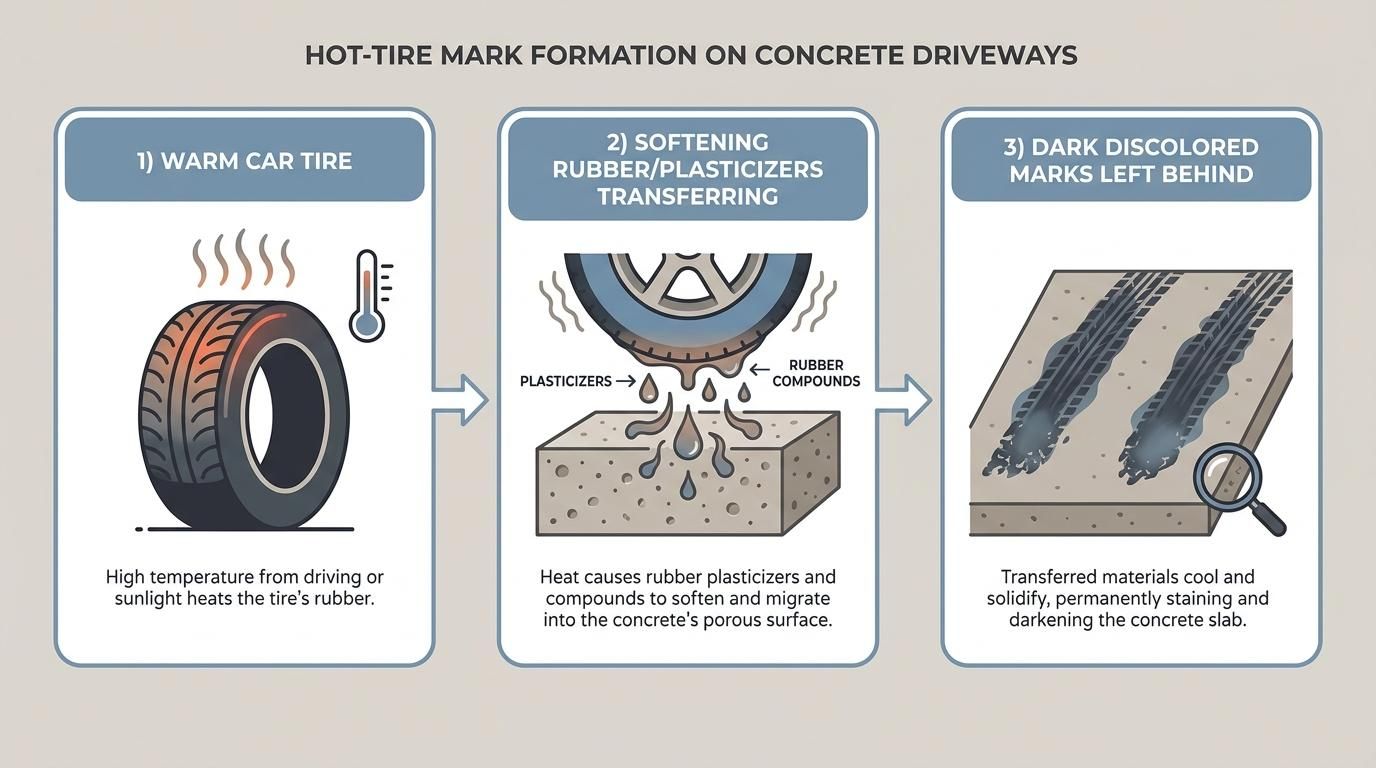
Tire marks aren’t really a stain in the usual sense. They form through a process called hot-tire pickup: as tires heat up from driving, the rubber softens and releases oils and plasticizers, which then transfer into the porous surface of the concrete when the car parks. A few things make it worse:

  • Hot weather: Summer heat keeps tires softer, so they deposit more residue onto the slab.
  • Unsealed concrete: Bare, porous concrete soaks up the rubber compounds far more readily than a sealed surface.
  • Parking in the same spot: Repeated contact in one place lets the marks build and darken over time.

Because the residue sinks into the pores rather than sitting on top, the marks resist plain water and need a product that can break down and lift the rubber.

How to Remove Tire Marks From Concrete

Work from gentlest to strongest, and give each step time to do its job before moving up:

1. Apply a Degreaser

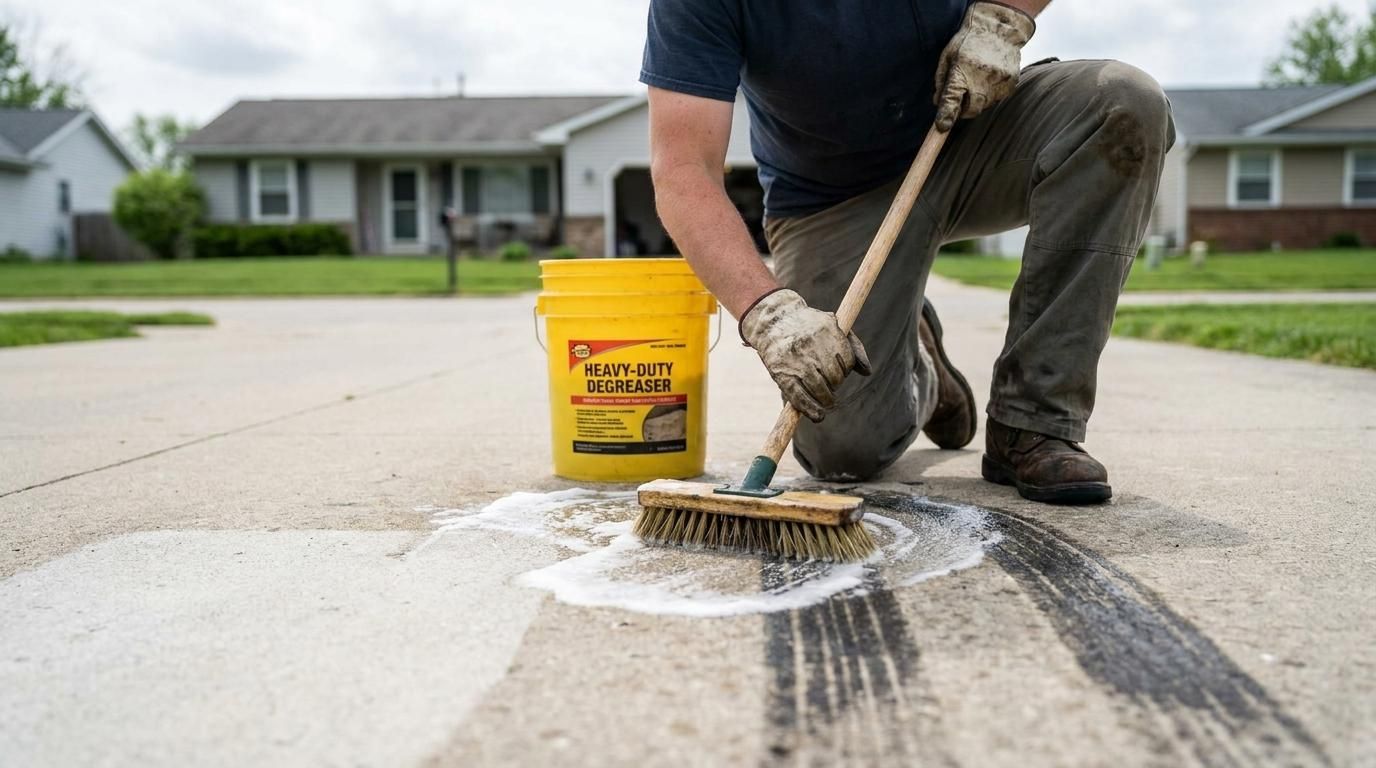
Cover the marks with a concrete degreaser or a citrus-based cleaner and let it dwell for several minutes so it can soften the embedded rubber. Reapply on heavier marks rather than rushing ahead. Cleaning the surface with a citrus degreaser also cuts the oily film that holds the rubber to the concrete. The dwell time does the real work, so resist scrubbing too early and let the degreaser penetrate the rubber first.

2. Scrub the Area

Work the cleaner in with a stiff-bristle brush, scrubbing in different directions. The marks should start to lighten and lift as the degreaser breaks the rubber loose from the pores. Keep the surface wet as you work so the loosened rubber lifts away instead of smearing. Switch to a clean section of the bristles as they load up with rubber, since a clogged brush polishes the mark instead of pulling it free.

3. Rinse and Pressure Wash

Rinse thoroughly. For marks that remain, consider pressure cleaning your driveway, a process that combines heat, pressure, and the right cleaner to draw out what hand-scrubbing leaves behind.

Preventing Tire Marks and Keeping Your Driveway Clean

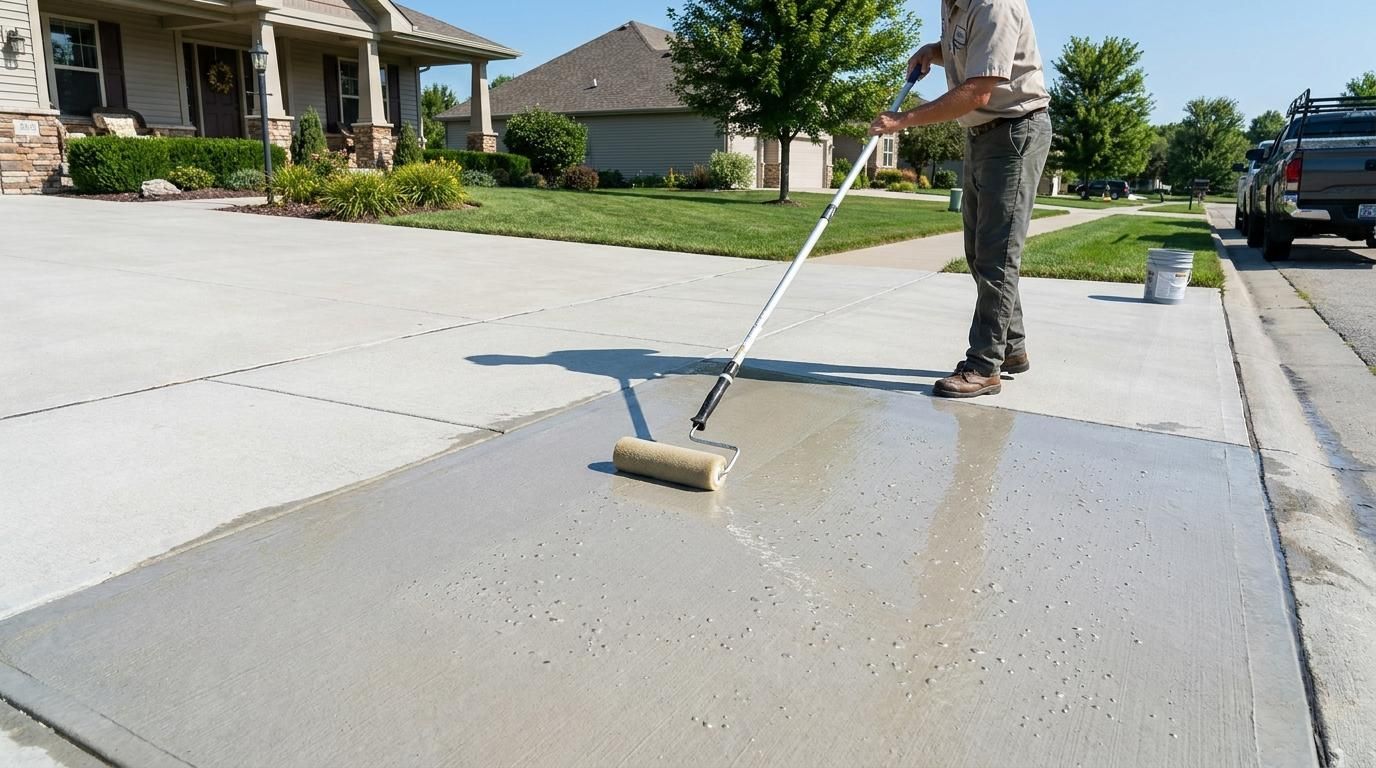
Since tire marks take hold in bare, porous concrete, professional concrete sealing is your best line of defense. By filling the microscopic pores of the slab, a sealer forces hot rubber and oils to sit on the surface where they can be easily wiped away instead of soaking in. As an added bonus, it also shrugs off the harsh road salt and freeze-thaw moisture that typically wear down Indianapolis driveways.

Routine cleaning goes a long way too, keeping minor residue from building up and hardening over time. When you combine a protective professional seal with periodic washing, you create a long-term defense system that keeps your driveway looking pristine and streak-free year-round.

Frequently Asked Questions

Are tire marks permanent on concrete?

Not usually. Most tire marks come out with a degreaser, scrubbing, and a thorough rinse, and pressure washing handles the stubborn ones. Marks left for years on bare concrete are the hardest, which is when professional cleaning makes the difference.

Does sealing concrete prevent tire marks?

Largely, yes. A quality sealer closes the pores that let hot-tire residue sink in, so the marks stay on the surface and wipe off easily. Sealing also protects against road salt and freeze-thaw damage through Indiana winters.

What is the best cleaner for tire marks on a driveway?

A dedicated concrete degreaser or a citrus-based cleaner works best, since both break down the rubber and oils that make up the mark. Avoid harsh acids, which can etch the concrete. For set-in marks, 317 Seal Inc. uses commercial-grade products and equipment to lift them safely.

Get Rid of Tire Marks for Good

Tire marks are softened rubber pressed into porous concrete, not permanent damage. A degreaser and some scrubbing clear most of them, while pressure washing handles marks that are more difficult to remove. If your slab is bare, expect them to return, because the concrete keeps absorbing fresh rubber every time it receives hot tires. Sealing closes those pores, so the next set of marks sits on the surface and can be wiped away.

Want the marks gone and your driveway protected so they stay gone? Get a free quote from 317 Seal Inc. or call (833) 317-7325. We’ll clean and seal your concrete so it looks new and stays that way for the long haul.

How to clean a concrete patio DIY methods
By Kris Fricks June 29, 2026
Learn how to clean a concrete patio with DIY methods for grime and algae, how to handle tough stains, and when to call an Indianapolis pro to clean and seal it.
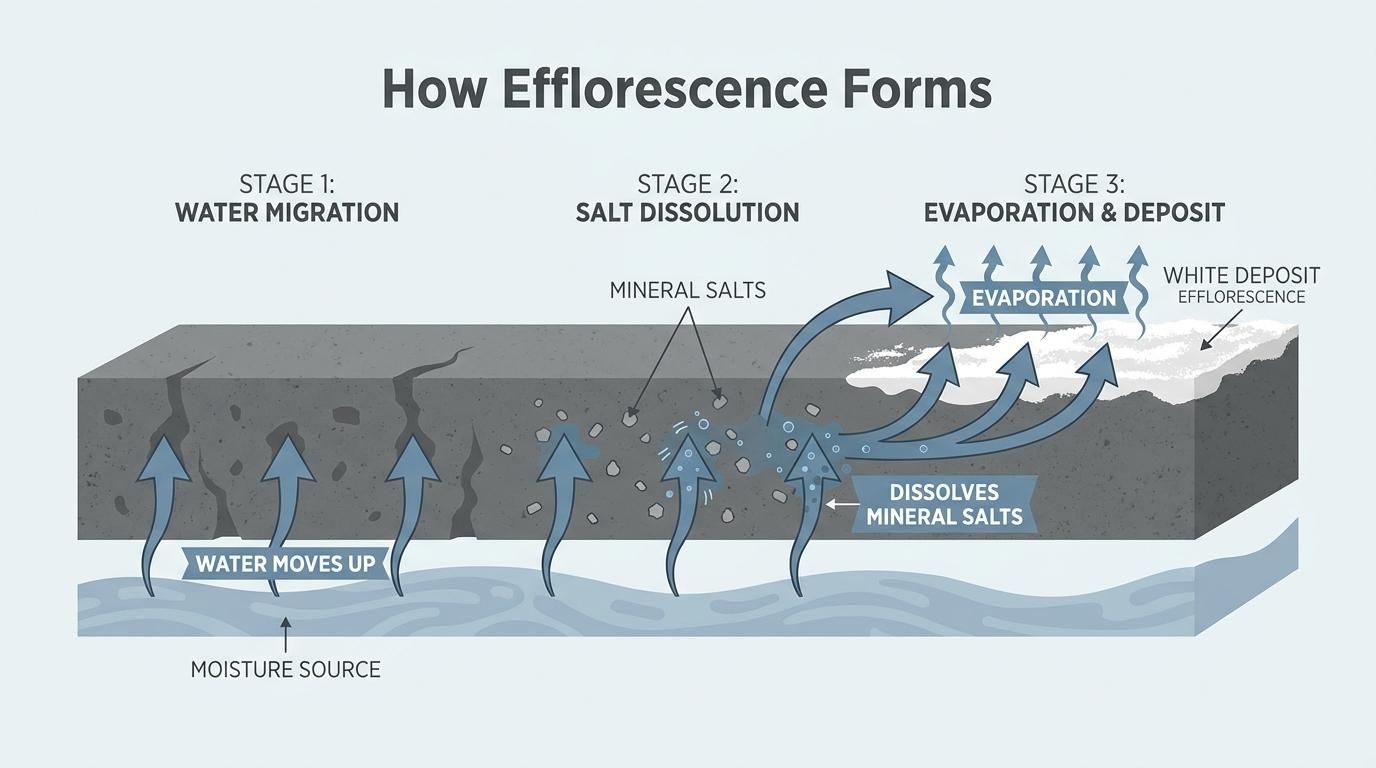
What causes efflorescence on concrete
By Kris Fricks June 21, 2026
What is efflorescence on concrete? Learn what causes the white haze, how to remove it step by step, and how sealing prevents it from returning in Indianapolis.
How to clean a concrete garage floor step by step
By Kris Fricks June 18, 2026
Learn how to clean a concrete garage floor step by step, tackle oil, salt, and rust stains, and keep it low-maintenance with sealing. Indianapolis pro tips.
Why pool decks need sealing before summer
By Kris Fricks June 15, 2026
Pool deck sealing in Indianapolis protects concrete from chlorine, splash-out, UV, and freeze-thaw. Learn why to seal before summer and how often to reseal.
Is muriatic acid safe to use on concrete
By Kris Fricks June 10, 2026
Is muriatic acid safe on concrete? Learn when to use it, how to apply it safely, and the gentler alternatives most Indianapolis driveways and patios actually need.
Types of stamped concrete sealer compared
By Kris Fricks June 6, 2026
Compare the best stamped concrete sealers for Indianapolis driveways and patios: acrylic, polyurethane, and penetrating. See which holds up to freeze-thaw and sun.
5 methods to remove paint from concrete
By Kris Fricks June 2, 2026
Learn how to remove paint from concrete with 5 methods Indianapolis pros use, from chemical strippers to sand blasting, plus when to call 317 Seal Inc.
By Kris Fricks May 29, 2026
A well-maintained concrete driveway lasts 25 to 30 years in Indianapolis. Learn what shortens its lifespan and how sealing extends it.
By Kris Fricks May 25, 2026
Use these four simple tests to check whether your concrete is sealed before reapplying sealer or scheduling professional concrete care.
By Kris Fricks May 21, 2026
Indianapolis driveways need resealing every 2 to 3 years due to freeze-thaw cycles and road salt. Learn how to tell when yours is due.
Show More