Why Is My Concrete Flaking? Causes and Fixes for Indianapolis Driveways
When concrete starts flaking, the reason is usually freeze-thaw damage, deicing salt exposure, or poor original curing. The surface layer breaks apart as trapped moisture expands and contracts through Indiana winters. 317 Seal Inc. diagnoses the cause and repairs the damage for Indianapolis homeowners dealing with flaking driveways, patios, and walkways.
A homeowner in the Broad Ripple area called last March about driveway flaking that appeared after their second winter. The previous contractor had sealed the driveway before the concrete fully cured, trapping moisture that cracked the surface from the inside out during the first hard freeze. This guide explains the main causes of concrete flaking on Indianapolis driveways and walks through the repair options that match each level of damage.
What Causes Concrete Flaking in Indianapolis?
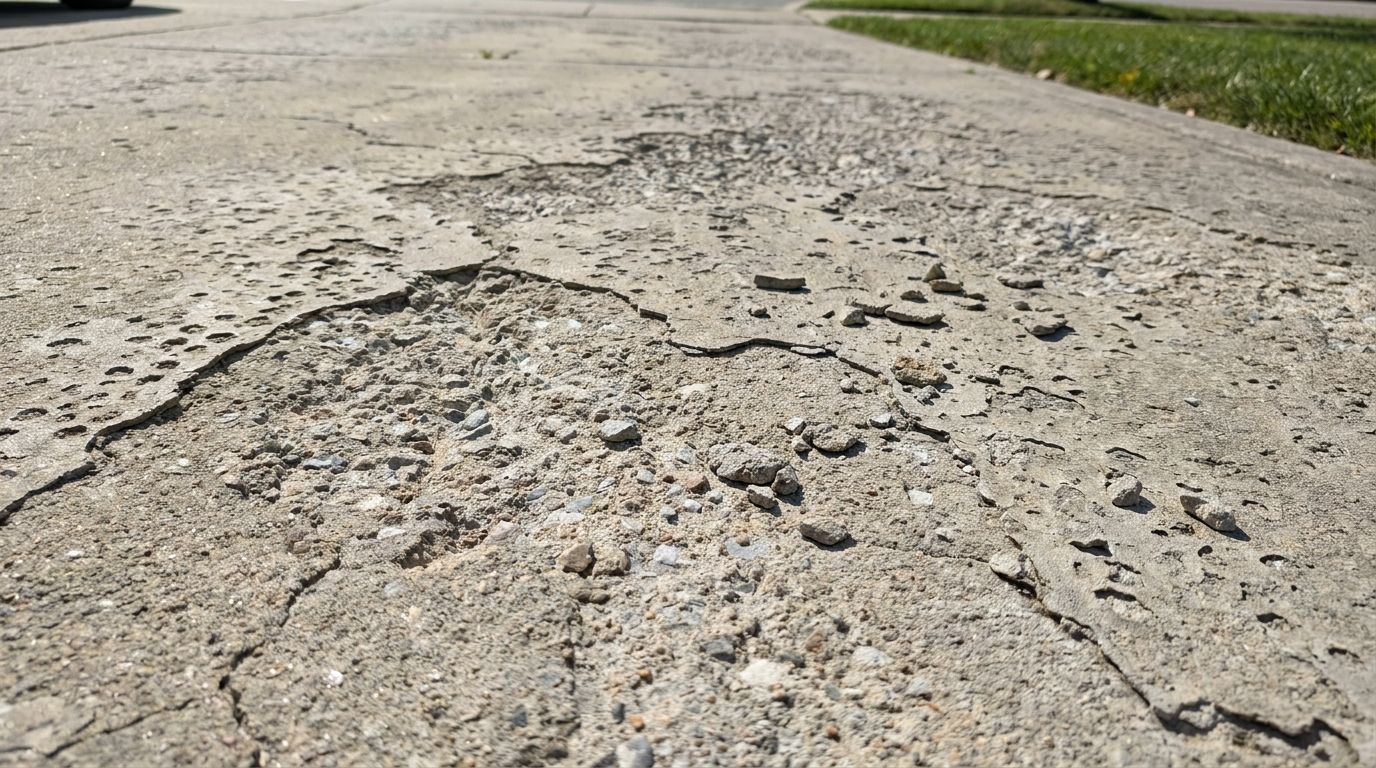
Flaking, also called spalling, happens when the top layer of concrete separates from the slab beneath it. Indianapolis driveways are especially vulnerable because Central Indiana's climate delivers the exact combination of conditions that trigger it.
Freeze-Thaw Cycles
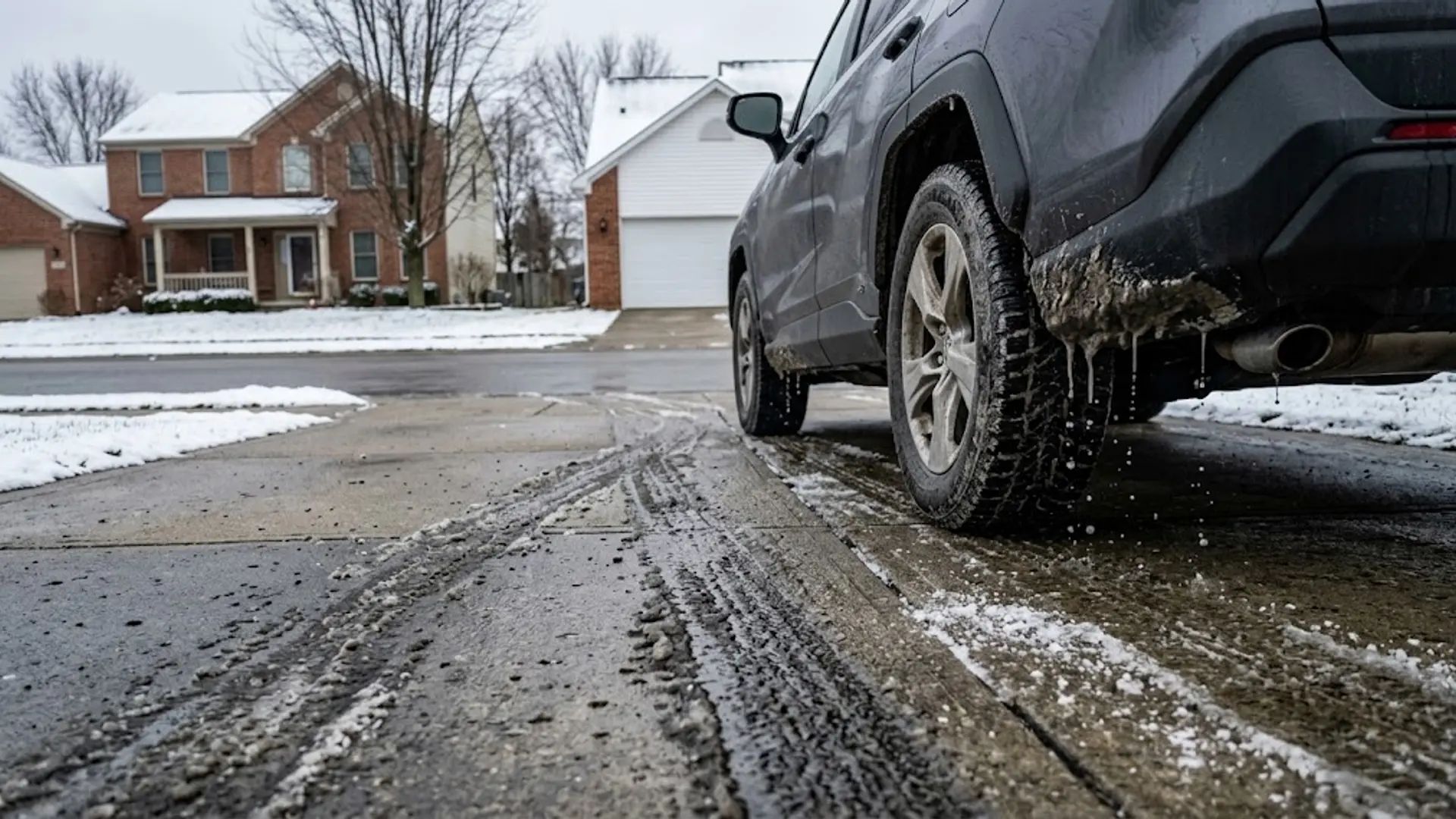
Water soaks into the pores of unsealed concrete. When temperatures drop below freezing, that water expands by about 9% in volume and pushes against the surrounding material. When it thaws, the pressure releases and the cycle resets. Indianapolis sees dozens of these cycles each winter. Over two or three seasons, the repeated expansion and contraction breaks the surface layer loose in thin flakes and chips.
Deicing Salt Damage
Road salt and chemical de-icers lower the freezing point of water on the surface, but they also increase the number of freeze-thaw cycles the concrete experiences in a single winter. Salt dissolves into the pore water and chemically attacks the calcium compounds in the cement paste. The result is accelerated surface breakdown that shows up as scaling and flaking, especially along driveway edges where salt accumulates most.
Poor Original Curing
Concrete that was finished too early, poured in extreme heat, or not kept moist during curing develops a weak surface layer. That layer is more porous and less resistant to freeze-thaw and salt than properly cured concrete. Flaking on driveways less than five years old often traces back to the original pour and finishing rather than weather alone.
How to Fix Flaking Concrete
The right fix depends on how deep the damage goes. Surface flaking that stays in the top quarter inch responds to different treatments than deep spalling that exposes aggregate or reaches the reinforcement.
Surface Repair and Patching
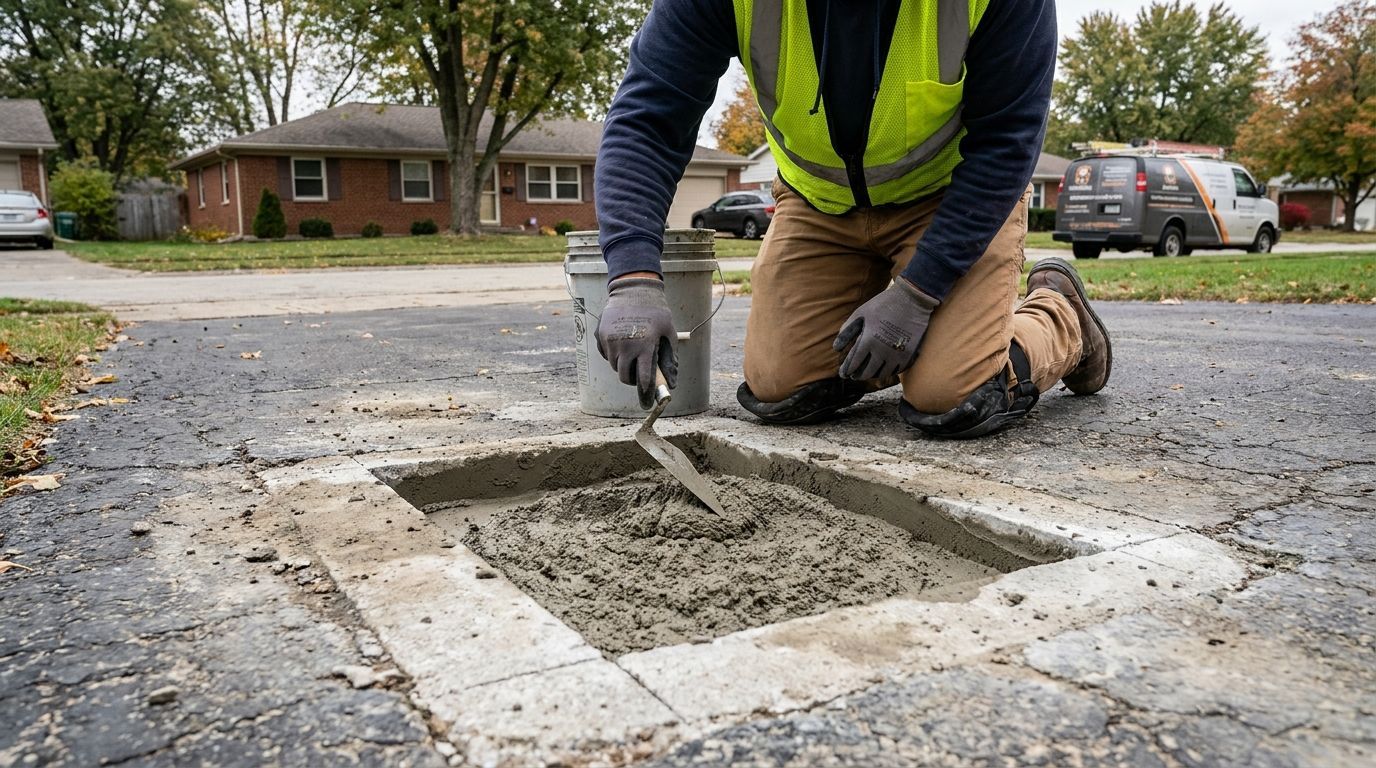
Shallow flaking can be repaired by removing the loose material, cleaning the exposed surface, and applying a polymer-modified repair mortar that bonds to the existing concrete. This restores the surface profile and prepares it for sealing. Our step-by-step driveway repair guide walks through the full process from damage assessment to finished repair.
Sealing to Prevent Future Flaking
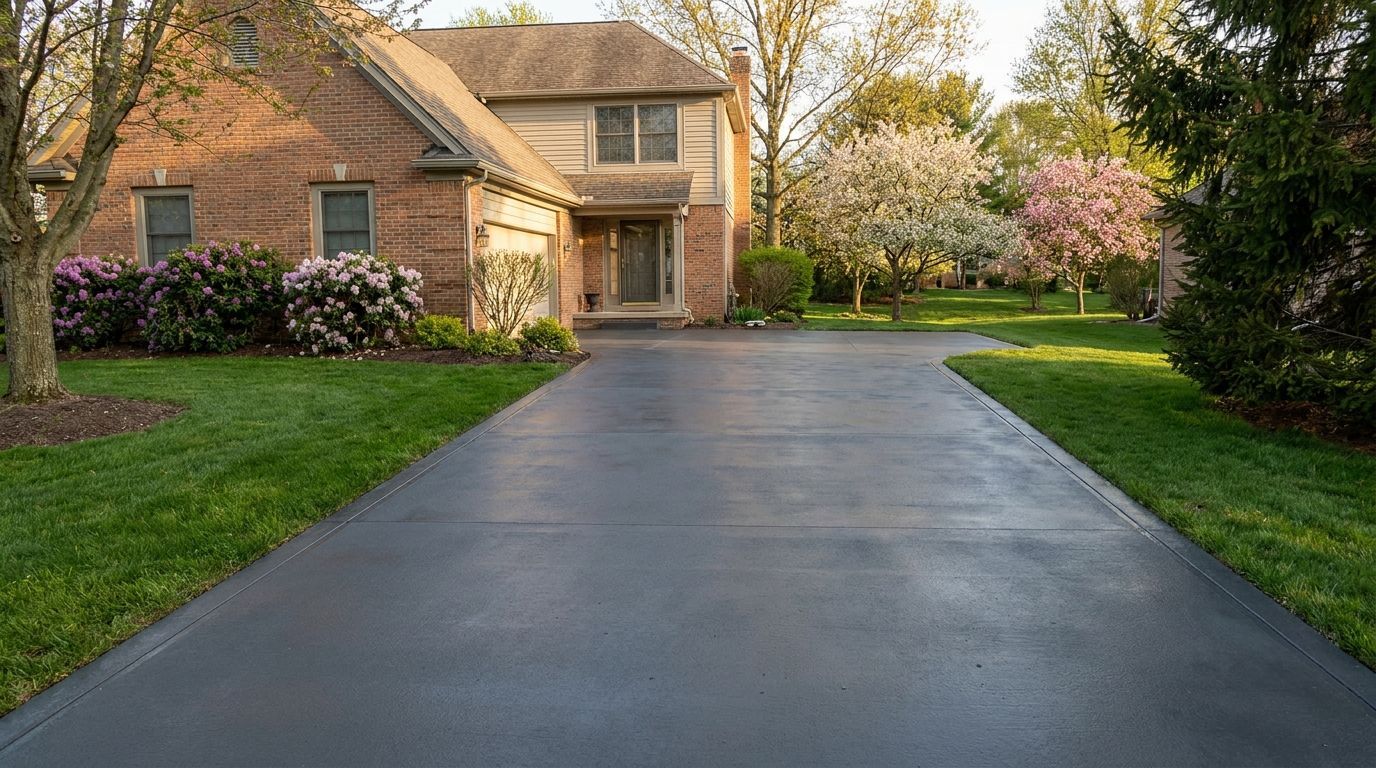
After repair, concrete sealing closes the surface pores and blocks water from entering. This stops the freeze-thaw cycle from reaching the interior of the slab. Resealing every two to three years maintains that barrier through Indianapolis winters. Without sealing after repair, the same flaking pattern returns within a few seasons.
When Replacement Is the Better Option
If flaking covers more than 30% of the driveway surface or exposes aggregate across large areas, patching becomes a patchwork that won't hold long-term. At that point, full or partial replacement is more cost-effective than repeated repairs. 317 Seal provides honest assessments and will recommend replacement when repair no longer makes sense.
Frequently Asked Questions
Can you seal concrete that is already flaking?
Sealing over active flaking traps moisture underneath and makes the problem worse. The damaged material needs to be removed and the concrete's surface must be repaired first. Once the repair cures, sealing the restored surface prevents new flaking from starting. 317 Seal Inc. inspects the damage and repairs before applying any sealer.
Is concrete flaking the same as spalling?
Flaking and spalling describe similar damage at different depths. Flaking typically refers to thin surface layers peeling away. Spalling involves deeper chunks breaking off, sometimes exposing the aggregate beneath. Both are caused by freeze-thaw cycles and salt damage in Indianapolis, but spalling usually indicates more advanced deterioration.
Does road salt cause concrete to flake?
Road salt is one of the primary causes of concrete flaking in Central Indiana. Salt increases the number of freeze-thaw cycles the surface experiences and chemically weakens the cement paste. Limiting salt use on your own driveway and sealing the concrete are the two most effective ways to reduce salt-related damage.
Stop the Flaking Before It Spreads
Concrete flaking in Indianapolis almost always traces back to moisture getting into the slab through unsealed pores. Freeze-thaw cycles and road salt do the rest. Catching it early and repairing the surface while the damage is shallow saves thousands compared to waiting until the driveway needs full replacement.
Contact 317 Seal Inc. for a free assessment of your flaking driveway. Call (833) 317-7325 or send us a message to schedule a visit and get ahead of the next Indianapolis winter.